29th May 2026
If you have ever cleaned your windows yourself and ended up with a streaky, smeared finish that somehow looks worse than before you started, tap water is likely the reason.
It is one of the most common frustrations homeowners run into when trying to keep their windows clean between professional cleans. The glass looks fine while it is wet, then as it dries the streaks appear and the whole thing needs doing again.
Here is what is actually happening and why pure water solves the problem completely.
What Is Actually in Tap Water
Tap water is not just water. By the time it reaches your home it contains a range of dissolved minerals and chemicals that are completely invisible while the water is in liquid form.
The most common are calcium and magnesium, which are responsible for what is referred to as water hardness. Hamilton's tap water contains measurable levels of these minerals, along with trace amounts of chlorine and other treatment chemicals used to make the water safe to drink.
None of this is a problem when you are drinking it. But when you use it to clean glass and it evaporates, every dissolved mineral and chemical that was in the water gets left behind on the surface. That residue is what you are seeing when you look at a streaky window.
Why the Streaks Keep Coming Back
The frustrating part is that wiping the glass dry does not fully solve it. Mineral deposits bond to glass over time and become harder to remove the longer they sit there.
If tap water is used regularly on windows without being properly removed, the mineral buildup accumulates with each clean. Eventually it gets to the point where the glass looks hazy or dull even when it is dry, and a standard wipe over will not clear it.
This is especially common on windows that face the sun, where the water evaporates faster and the minerals are left behind more quickly.
What Pure Water Is and Why It Works
Pure water is tap water that has been run through a filtration process that removes dissolved minerals, chemicals, and other contaminants until the water is almost completely clean.
The measure used for this is called TDS, which stands for total dissolved solids. Tap water typically sits somewhere between 100 and 300 parts per million depending on the area. Pure water used for window cleaning is filtered down to close to zero parts per million.
When water with a zero or near zero TDS rating hits glass and evaporates, there is nothing left behind. No minerals, no chemicals, no residue. The glass dries completely clear.
How Pure Water Window Cleaning Actually Works
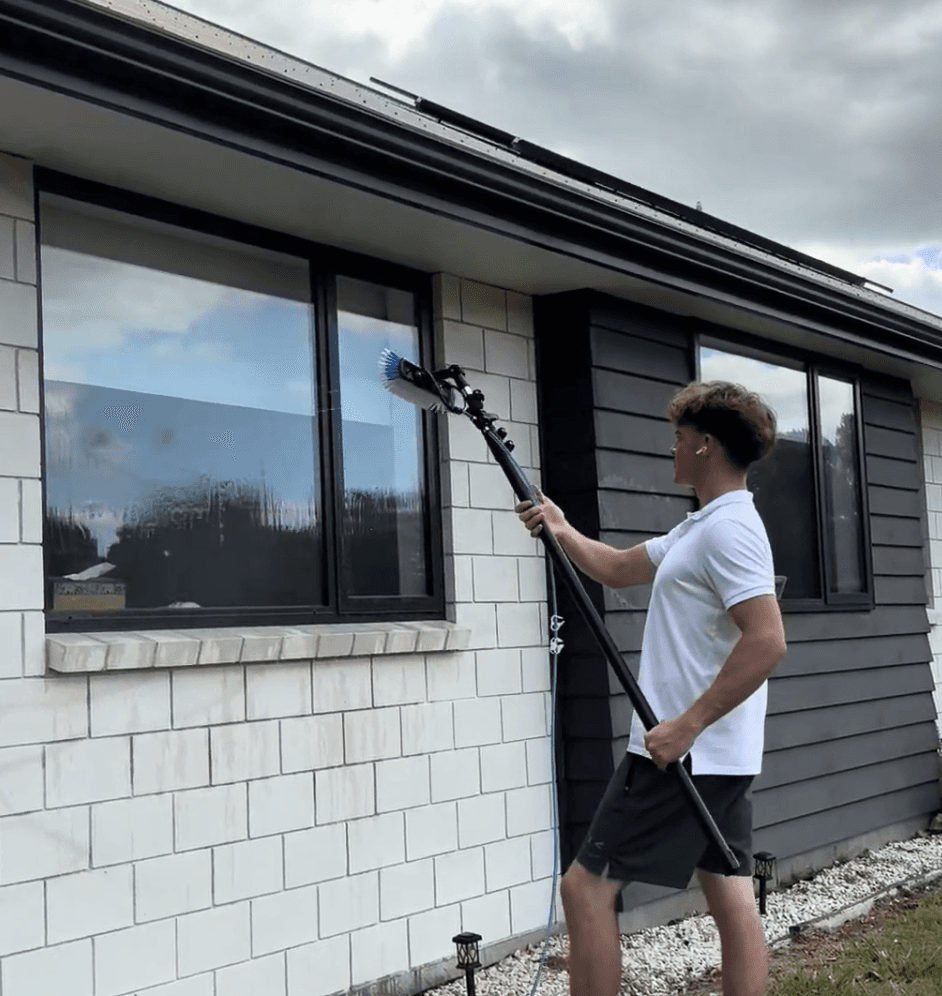
Pure water window cleaning uses a water fed pole system connected to a tank of filtered water. The pole extends to reach windows at height without ladders, and soft bristle brushes at the end agitate and loosen any dirt or debris on the glass.
The pure water is fed through the brush continuously, rinsing the window thoroughly as it is cleaned. Because the water leaving the glass is close to zero TDS, it actively pulls any remaining residue off the surface as it drains away.
The windows are left wet at the end of the clean, which surprises some homeowners the first time they see it. But because the water is pure, it dries to a completely clear finish without any need to squeegee or dry the glass by hand.
What About Interior Windows
Pure water systems are designed for exterior window cleaning. Interior windows are cleaned using traditional hand tools, microfibre cloths, and professional cleaning solutions that leave a clean, smear free finish without the need for rinsing.
The combination of pure water on the outside and hand tools on the inside is what gives a professional window clean a noticeably better result than a standard DIY job with a bucket of tap water and a squeegee.
The Bottom Line
Tap water leaves streaks because of the minerals and chemicals dissolved in it. When the water evaporates those minerals stay on the glass and build up over time.
Pure water solves the problem by removing those dissolved solids before the water ever touches your windows. What is left behind when it dries is nothing, which means genuinely clear glass every time.
If your windows have been cleaned with tap water for a long time and have built up mineral deposits, a professional clean with a pure water system will make a noticeable difference to how they look.
Get in touch with the MJ Exterior Cleaning team in Hamilton and we will sort them out.